Standards
What Is a Tax Depreciation Schedule? Three Dates Decide If You Need One

A tax depreciation schedule is a one-off document that identifies every depreciable item in an investment property and projects the deductions year by year, so your accountant can claim them without re-doing the work each return.
That is the definition. The more useful question — the one most pages on this subject avoid, because they are selling the document — is whether there is anything left for a schedule to find in your particular property. Three dates settle it, and you can check two of them yourself in about five minutes.
What a schedule actually contains
Two separate regimes, under two divisions of the Income Tax Assessment Act 1997.
Division 43 — capital works. The building itself: walls, roof, fixed plumbing, structural improvements. Deducted at a flat rate over a long fixed period.
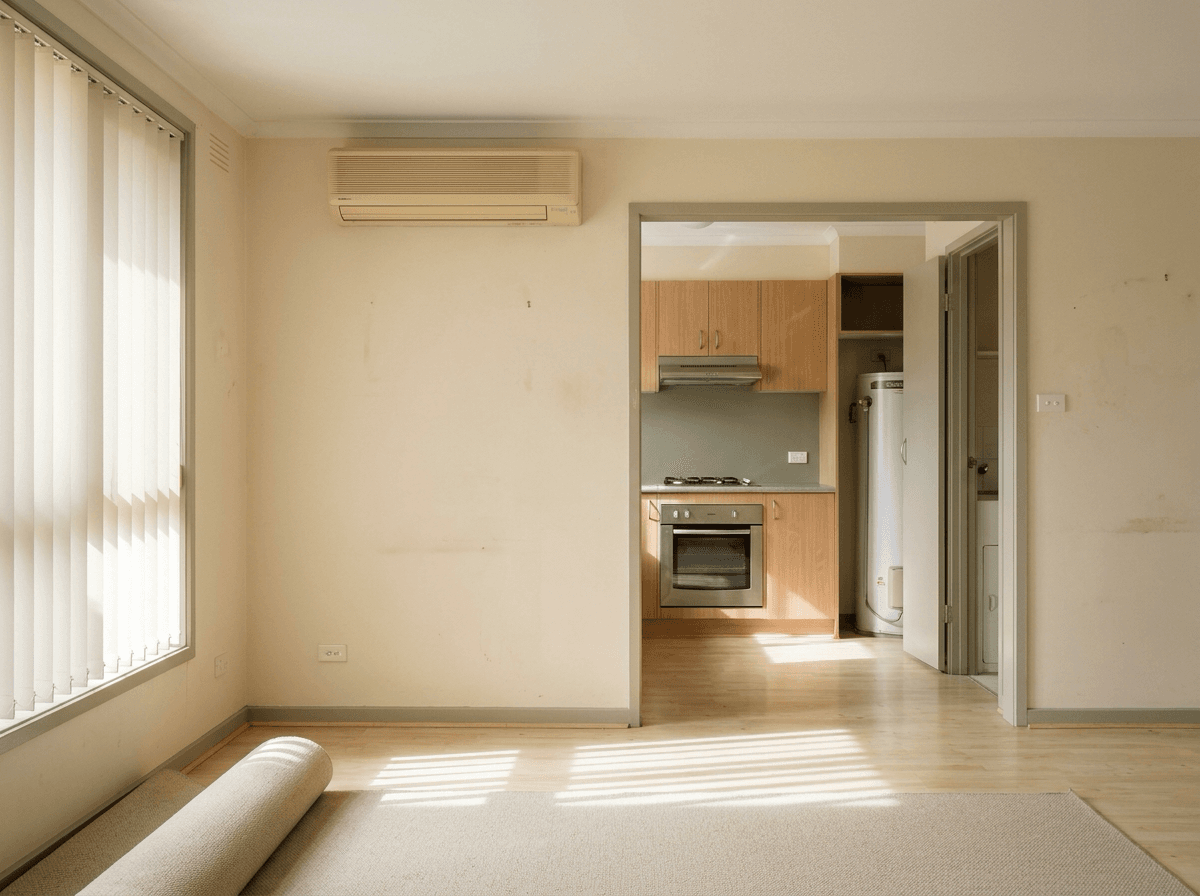
Division 40 — plant and equipment. The removable and mechanical items: carpet, blinds, the oven, the air conditioner, the hot water system. Each is deducted over its own effective life, drawn from the ATO’s published determinations rather than chosen by you.
A schedule prices both and projects the claim forward. It only needs redoing after significant renovation.
Date one: when construction started
Division 43 does not apply to every building. For residential property, the commencement date of construction decides both whether you get a deduction and for how long.
| Construction commenced | Rate | Period | Where that leaves it in 2026 |
|---|---|---|---|
| Before 18 July 1985 | — | — | No deduction on the original structure |
| 18 July 1985 – 15 Sept 1987 | 4% | 25 years | Exhausted — on any realistic completion date, the 25 years are gone |
| After 15 September 1987 | 2.5% | 40 years | Still running, counted from completion |
The middle row is the one that surprises people. A 1986 building did attract a Division 43 deduction, at a higher rate than anything built since — but only for 25 years, and that window has closed. This is not a personal entitlement that resets when the property changes hands: the period itself has run out.
For anything built after September 1987, the 40 years run from completion, not from your purchase. A unit completed in 1990 carries structural deductions until roughly 2030 no matter how many times it has been sold since.
Date two: 9 May 2017
At 7:30pm AEST on 9 May 2017, Division 40 was closed off for most second-hand residential property. The rule sits at section 40-27 of the ITAA 1997, inserted by the Treasury Laws Amendment (Housing Tax Integrity) Act 2017.
In practice: if you acquired a second-hand residential rental property after that moment, you cannot deduct the decline in value of the plant and equipment that was already in it. The carpet, the air conditioner and the oven you inherited from the vendor are worth nothing to you as deductions.
The carve-outs — assets you are the first to use, property used in carrying on a business, and assets held by corporate tax entities, superannuation funds other than SMSFs, public unit trusts and managed investment trusts — are set out in section 40-27 itself, which is where they should be read rather than in anyone’s summary, this one included.
Two things the rule does not do. It leaves Division 43 alone, so capital works remain claimable on an eligible second-hand property. And it does not reach assets you install yourself — buy and fit a new oven and you are its first user.
Date three: renovations after September 1987
This is the date you cannot check yourself, and it is often the one that justifies the schedule.
Eligible Division 43 work carried out after 15 September 1987 is claimable by the current owner even where a previous owner paid for it, and even though the property is second-hand. So a 1970s house renovated in 2005 carries a live capital works entitlement on that renovation, running into the 2040s — while the original structure carries nothing at all.
You almost certainly do not know what was spent, or when. Often the vendor does not either. Establishing it is the actual work a schedule does.
What the sellers of schedules tend to leave out
A Division 43 deduction is not free money. Section 110-45(2) of the ITAA 1997 provides that expenditure “does not form part of the cost base to the extent you have deducted or can deduct it for an income year”. Capital works you claim therefore come out of the property’s CGT cost base and enlarge the capital gain when you eventually sell.
That does not make it a bad deal — a dollar now beats a dollar later, the eventual gain may attract the 50 per cent discount, and you may never sell. But it is a timing shift rather than a windfall, and a page written to sell you a schedule will rarely say so. If a sale is near, model that interaction first: see capital gains tax valuation.
Who is allowed to prepare one
Where the actual construction cost is unknown — the normal situation for a second-hand property — the ATO accepts an estimate from an appropriately qualified person. Taxation Ruling TR 97/25 is unusually blunt about who that is. Quantity surveyors qualify. And, in the ruling’s own words:
“Unless they are otherwise qualified, valuers, real estate agents, accountants and solicitors generally have neither the relevant qualifications nor experience to make construction cost estimates.”
It cuts against the intuition: a certified valuer is not, by virtue of that certification, qualified to estimate a construction cost. They are different disciplines. The same ruling also rejects published building cost guides unless a qualified person is using them as a guide rather than as the answer. Our own tax depreciation schedules are prepared by qualified quantity surveyors, and the plant and equipment side by our valuers.
So is it worth ordering?
The case where the answer is probably no: a residential building whose construction started before 18 July 1985, acquired second-hand after 9 May 2017, with no qualifying work done since September 1987. Division 43 never applied to the original structure, Division 40 is shut, and all that remains is whatever you install yourself.
Change any one of those three conditions and the answer flips. Which is why the third date matters most — it is the only one you cannot settle from your own couch.
If you have already lodged returns without claiming, the standard amendment window is two years from the notice of assessment for an individual with simple affairs, and generally four years for other taxpayers. Your accountant will know which applies to you.
Methodology
- Rules cited: Divisions 40 and 43 and sections 40-27 and 110-45(2) of the Income Tax Assessment Act 1997; the Treasury Laws Amendment (Housing Tax Integrity) Act 2017; Taxation Ruling TR 97/25. The section 110-45(2) wording and the TR 97/25 passage are quoted from the ATO Legal Database.
- ⚠️ We did not read the consolidated Act directly — legislation.gov.au and AustLII both refused automated access while this was written, so the rates, commencement dates and carve-outs were verified as a set against published summaries instead. They are long-standing and stable, but confirm anything you intend to act on.
- The “exhausted” verdict on the 4 per cent row is our inference, not a published statement: the entitlement runs 25 years from completion, so construction started by 15 September 1987 has passed it on any plausible completion date. A build lasting more than a decade would be the exception.
- We are valuers and quantity surveyors, not accountants. Whether a deduction is available to a particular taxpayer in a particular year is a question for their accountant.
Frequently asked questions
What is a tax depreciation schedule?
It is a one-off report that identifies the depreciable items in an investment property and projects the available deductions year by year, so they can be claimed without recalculating each return. It covers two regimes under the Income Tax Assessment Act 1997: Division 43 capital works, meaning the building structure and qualifying renovations, and Division 40 plant and equipment, meaning removable items such as carpet, blinds and appliances. Where the original construction cost is unknown, Taxation Ruling TR 97/25 requires the estimate to come from an appropriately qualified person — it names quantity surveyors, and states that valuers, real estate agents, accountants and solicitors generally do not have that expertise unless otherwise qualified.
Is a depreciation schedule worth it for an older property?
Often yes, but not always, and three dates decide it. Residential construction that started before 18 July 1985 attracts no Division 43 deduction on the original structure; construction between 18 July 1985 and 15 September 1987 attracted 4 per cent over 25 years, a period that has now run out. Separately, since 7:30pm AEST on 9 May 2017, section 40-27 of the ITAA 1997 denies Division 40 deductions on previously used plant and equipment in second-hand residential property, subject to exclusions set out in that section. What frequently saves the schedule is renovation: qualifying Division 43 work done after 15 September 1987 remains claimable by the current owner even if a previous owner paid for it, and that is the one thing an owner cannot usually establish without a quantity surveyor.
This article is general information about Australian tax rules as they affect property depreciation — it is not tax, accounting or financial advice, and no deduction described here is available to every taxpayer. Confirm your position with your accountant. Last verified 10 August 2026.
See also: Tax Depreciation Schedule · Plant & Equipment Valuation · How Plant and Equipment Is Valued in Australia · Retrospective Valuation for CGT Cost Base · What a Property Valuation Costs in Australia

About the author
Tajinder Dhillon
Principal Valuer
Tajinder Dhillon is the Principal Valuer at Landmark Valuations, a RICS-regulated property valuation firm. He leads independent valuations across residential, commercial, industrial and rural property throughout Australia.
Connect on LinkedIn