Asset Valuation Australia
Independent, RICS-certified asset valuations for councils, government bodies, and asset-heavy organisations in every state and territory — land and buildings, infrastructure, and plant and equipment at fair value under AASB 13 and AASB 116.
About This Service
What Is Asset Valuation?
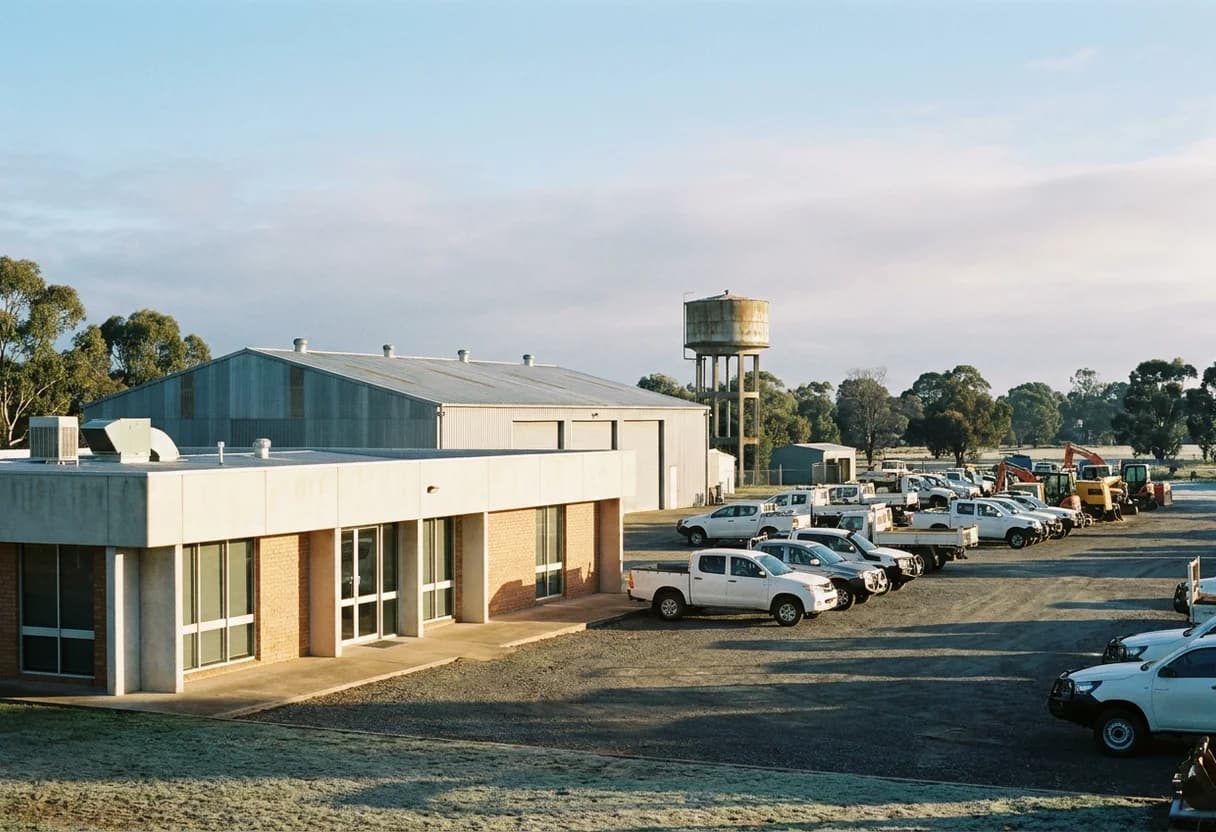
An asset valuation assesses the fair value of an organisation’s physical assets — land and buildings, infrastructure, and plant and equipment — typically for financial reporting, audit, insurance, or asset management purposes. Where a standard property valuation addresses a single asset, an asset valuation usually covers an entire asset register: every depot, hall, office, reserve, pipeline, and vehicle fleet an organisation controls.
Most asset valuations are driven by the accounting standards. AASB 13 defines fair value, and AASB 116 requires that assets carried at revalued amounts be revalued with sufficient regularity that carrying values do not differ materially from fair value — the requirement that puts local councils, government agencies, schools, and asset-heavy corporates on a regular revaluation cycle, scrutinised by auditors and, for the public sector, by each state’s Auditor-General. Specialised assets with no active market — community halls, roads, water infrastructure — are valued on a depreciated replacement cost basis, while commercial and residential holdings are valued on market evidence. See our plain-English summary of AASB 13, 116 and 140 for what each standard requires.
Landmark Valuations delivers asset valuations across every Australian state and territory — from Hobart to Perth, Canberra to Darwin — to RICS Red Book Global Standards and the International Valuation Standards. Reports are structured for financial reporting: componentised where required, with useful lives and residual values documented, and methodology that withstands audit review. For portfolio engagements we agree a staged inspection program so disruption to your operations stays minimal.
Requirements are set jurisdiction by jurisdiction, not nationally. Each state and territory sets its own revaluation cycle and audit expectations for the entities it oversees, so a council in Tasmania, a department in Victoria and an agency in the ACT are not working to the same clock even though they all report fair value under the same accounting standards. We work across all eight — Tasmania, Victoria, New South Wales, Queensland, South Australia, Western Australia, the Northern Territory and the ACT — and the jurisdiction-by-jurisdiction requirements are set out in our guide to council asset revaluation by state.
Our Promise
Why Landmark Valuations.

Asset-class expertise
Valuers specialised in the asset type at hand — with current familiarity of the sub-market drivers, tenancy structures, and risk factors that materially shift the figure.

Methodology fit to the asset
Direct Comparison, Income Capitalisation, or Summation — applied to the standard your report needs to meet, with the full evidence trail documented inside the report.

RICS Regulated Firm
Registered with RICS (firm 929744) and prepared to the RICS Red Book Global 2025 — internationally recognised, and accepted by Australian banks, courts and revenue offices across the full range of professional and regulatory use cases.
Compliance
RICS Red Book Compliant.
Every valuation we produce adheres to the Royal Institution of Chartered Surveyors (RICS) Red Book Global Standards 2025 and the International Valuation Standards (IVS). Your report is recognised by banks, courts, the Australian Taxation Office, and regulatory bodies worldwide. RICS regulation brings rigorous quality assurance, professional indemnity insurance, and a complaints handling process that protects your interests at every stage.



Request a Valuation
Tell us about your property.
FAQ
Frequently Asked Questions.
Explore more
Related services.
Other asset types

Related services


Related purposes

Further Reading
In-depth on this topic.
- Council Asset Revaluation Requirements by State — Australia 2026Only WA (5 years) and the ACT (3 years) hard-mandate asset revaluation cycles — yet auditors flagged deficiencies at 68 NSW and 56 QLD councils.
- AASB 13, AASB 116 and AASB 140 Summarised: What Each Standard Requires for Property ValuationPlain-English summary of AASB 13, 116 and 140 — when fair value is required, how often property must be revalued, and what they say about valuers.

Coverage
Every state, every territory.
RICS-regulated valuations from Sydney to Hobart, Darwin to Perth, and every postcode in between.